
A 30th Anniversary Edition of My Chiasmus Book!
I’m currently writing a proposal for a 30th Anniversary Edition of my 1999 book, Never Let a Fool Kiss You or a Kiss Fool You. The new edition will retain the best material from the original book, but will be substantially revised and expanded to include the most memorable examples of chiasmus from the past three decades.
I’m especially interested in finding new examples that have appeared since the book was published—in books, films, television shows, speeches, advertisements, cartoons, songs and song titles, newspaper articles, interviews, and everyday conversation. I’m also looking for older gems that somehow escaped my attention the first time around.
And this is where I could use your help. If you’d like to join my Chiasmus Research Team, keep your eyes and ears open for noteworthy examples and send them my way. Please include as much information as you can about who said or wrote it, and where it appeared. If one of your discoveries ends up in the Anniversary Edition, you’ll have the satisfaction of knowing that you helped make the new book better—and, of course, you’ll receive an acknowledgment in the book for your contribution. And if you provide five examples that make it into the book, I’ll send you a personally-inscribed copy.
Opening Line of the Week
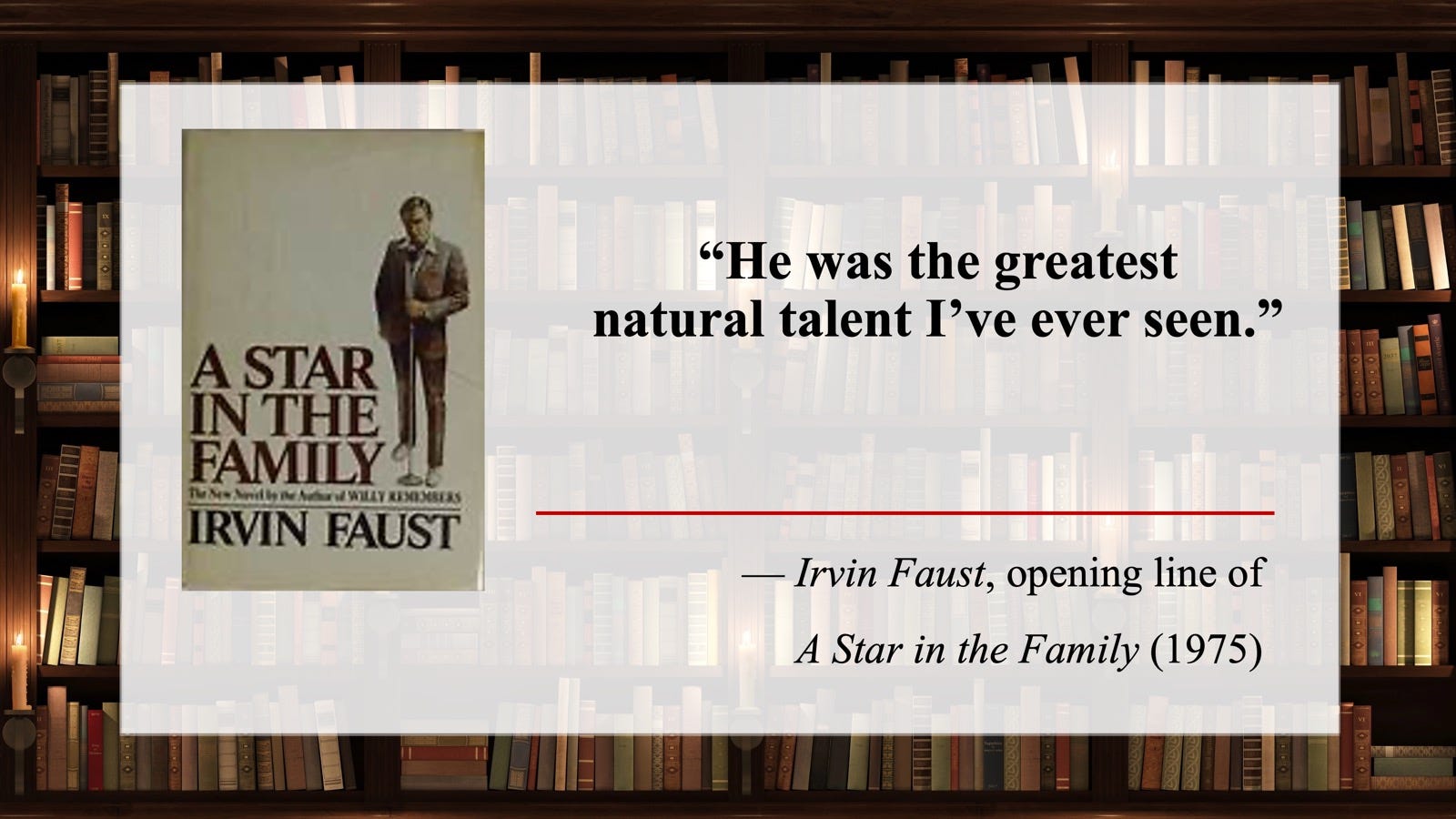
This deceptively simple opener immediately arouses the reader’s curiosity. The phrase greatest natural talent may stand out, but the real “hook” is the unanswered question that is instantly planted in our minds: Who is this man, and what extraordinary talent did he possess?”
For more than 2,000 memorable opening lines from every genre of world literature, go to www.GreatOpeningLines.com.
This Week’s Puzzler
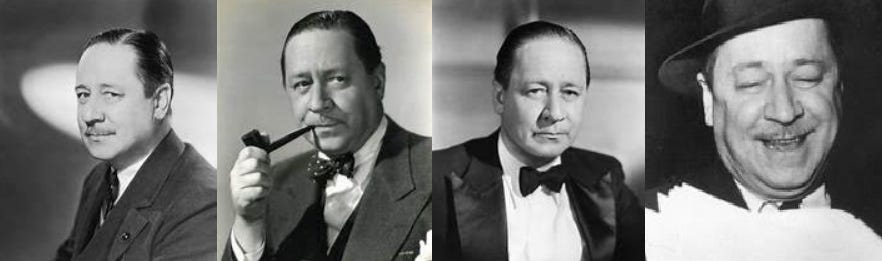
On September 15, 1889, this man was born in Worcester, Massachusetts. After graduating from Philips Exeter Academy in 1908, he attended Harvard University, where he served as editor of the Harvard Lampoon for two consecutive years.
After college, he worked at a succession of writing jobs at The New York Tribune, Life magazine, and Vanity Fair, before finding his true calling as a writer and humorist. In the 1920s, he became one of the original contributors to a sophisticated new magazine called The New Yorker, where his understated comic essays helped establish the magazine’s distinctive style—and his reputation as a writer.
He was also a prominent member of the celebrated Algonquin Round Table, that legendary group of writers, critics, actors, and assorted wits who regularly gathered for lunch at New York’s Algonquin Hotel. While his companions included such great wits as Dorothy Parker, Alexander Woollcott, and George S. Kaufman, this week’s Mystery Man developed his own distinctive comic persona—that of a genial, slightly bewildered ordinary man attempting to make his way through an increasingly complicated world.
In the 1930s, he spent most of his time in Hollywood, where made nearly fifty short subject films and appeared in almost fifty feature films. In 1935, he won a Oscar for his film “How to Sleep,” now regarded as a film classic
Noted for his wry sense of humor, he authored many unforgettable lines in his career, including this one:
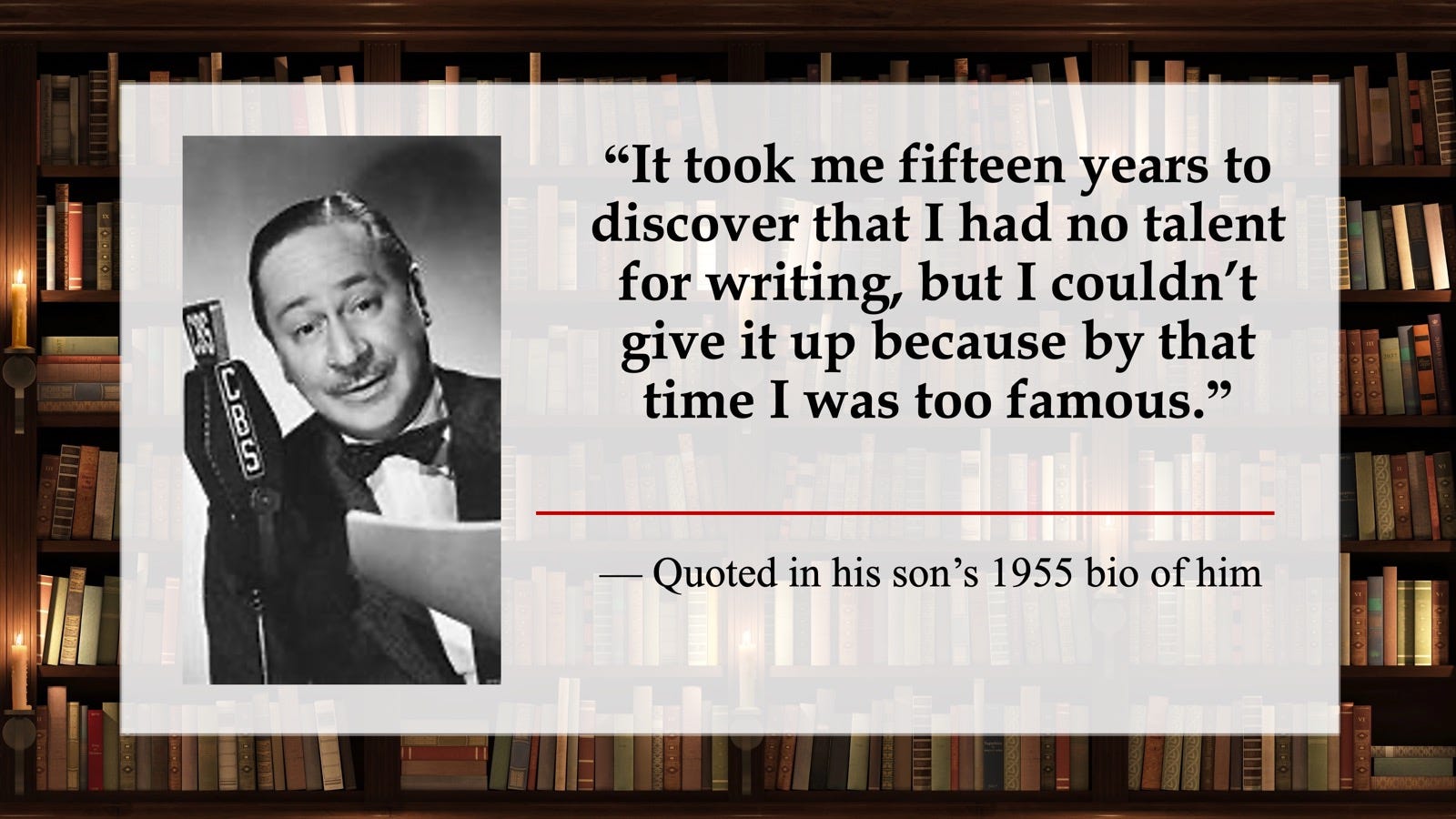
Who is this person? What was his son’s name? (Answers below)
What Role Has Talent Played in Your Life?
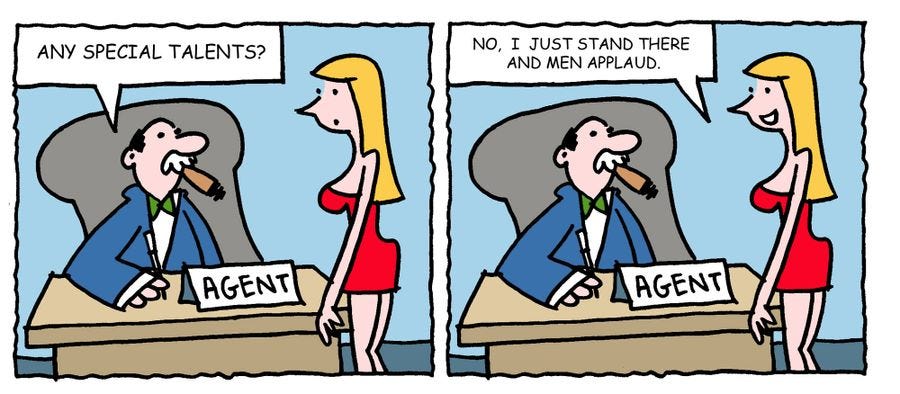
The quotation in this week’s Puzzler is a humorous look at one of history’s most interesting themes—that fame is not necessarily an indicator of talent, and talent is not a particularly good predictor of fame. We see the theme play out whenever people of modest ability enjoy enormous success while their far-more-talented brethren are toiling away in obscurity.
Most people believe that talent will eventually announce itself to the world. Give a person enough ability, we tell ourselves, and recognition will surely follow. But history offers little support for this proposition. Extraordinary talents have sometimes gone unrecognized for decades—or entire lifetimes—while people of considerably less ability have become celebrated figures. Talent, it turns out, is only one of many ingredients in the complicated recipe we call success.
Before going further, though, let’s examine the word talent more closely.
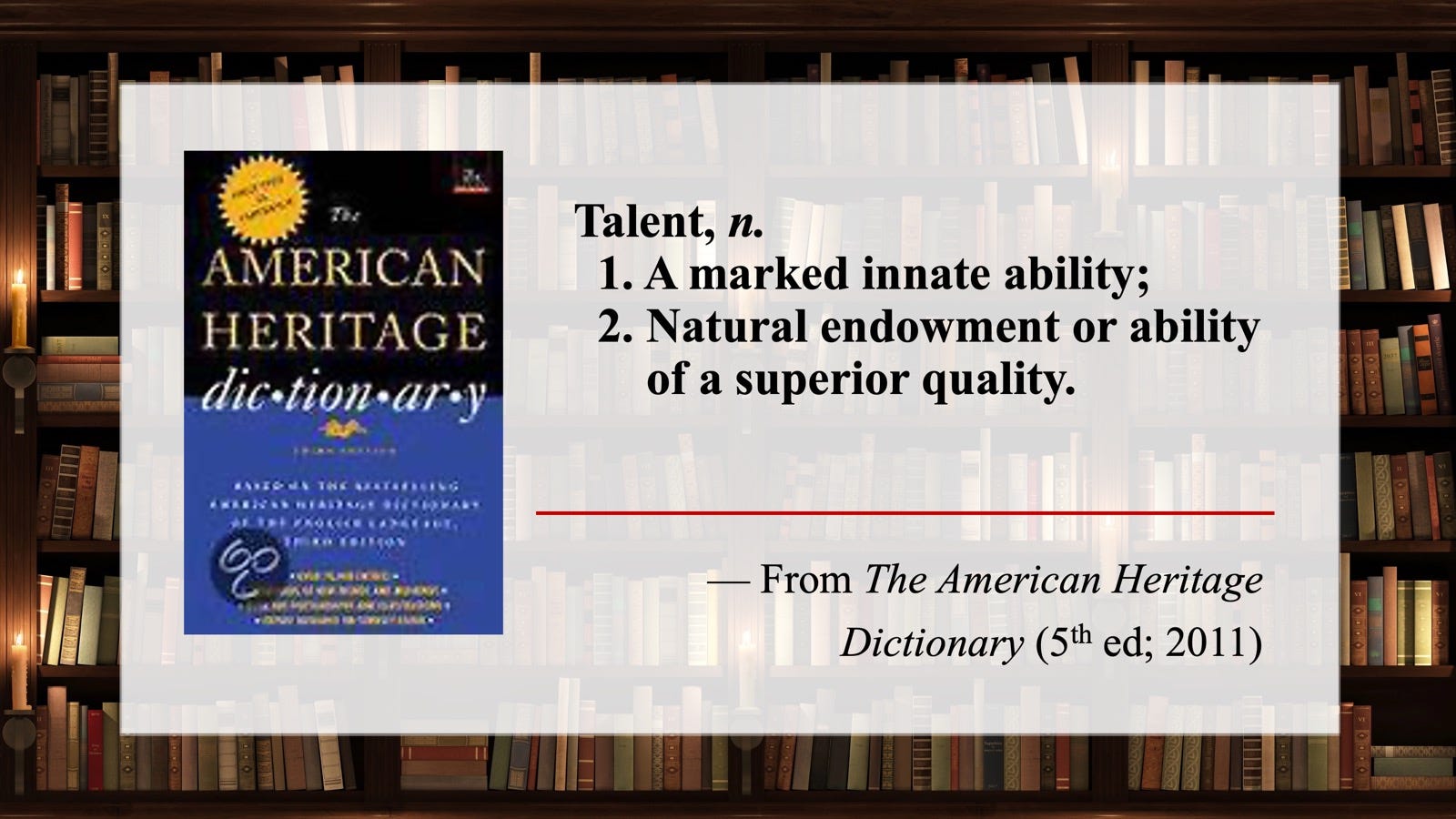
In a Usage Note, the AHD editors, wrote that “Talent emphasizes inborn ability, especially in the arts.” They used a quote from Aldous Huxley to illustrate the point:
“There is no substitute for talent. Industry and all the virtues are of no avail.”
The English word talent derives from the Greek talanton, meaning “something weighed.” In ancient Greece, a talent was a unit of measurement used to indicate the amount of liquid (like water or wine) or bulk goods (like grain or sand) in a clay container (one talent was equivalent to about one cubic foot).
Because precious metals were also weighed to determine their value, talent eventually became a monetary unit as well. In ancient Athens, for example, one talent amounted to roughly 58 pounds of silver. In its root sense, though, the word talent had absolutely nothing to do with a person’s ability.
And then something remarkable happened.
In Jesus’s famous Parable of the Talents (Matthew 25:14–30), a master who is preparing for a long journey decides to entrust his considerable wealth—an amount equal to eight talents—to three servants. Dispensing amounts according to the abilities of each man, he gives one servant five talents, the second servant two, and the third only one.
Returning home after a long absence, the master is pleased to discover that the first two servants put their talents to work, doubling the amount they originally received. He generously rewards both.
The third servant, however, took a very different course. Fearful of losing what had been entrusted to him, he buried his single talent in the ground. When the master returned, the servant produced the original talent. Nothing had been lost, but nothing had been gained. Angry and upset, the master called him “wicked and lazy” for failing to put his talent to productive use. He ordered that the single talent be taken from him and given to the first servant.
And here we arrive at a remarkable turning point in the history of the word. In the biblical story, a talent was still a quantity of money. But the parable carried a powerful underlying message: what we’ve been given is meant to be put to use. Over the centuries, that idea transformed the meaning of talent from a quantity of money into the modern sense of a natural gift or ability—and, by implication, one that should be developed and used. We now see it expressed everywhere.
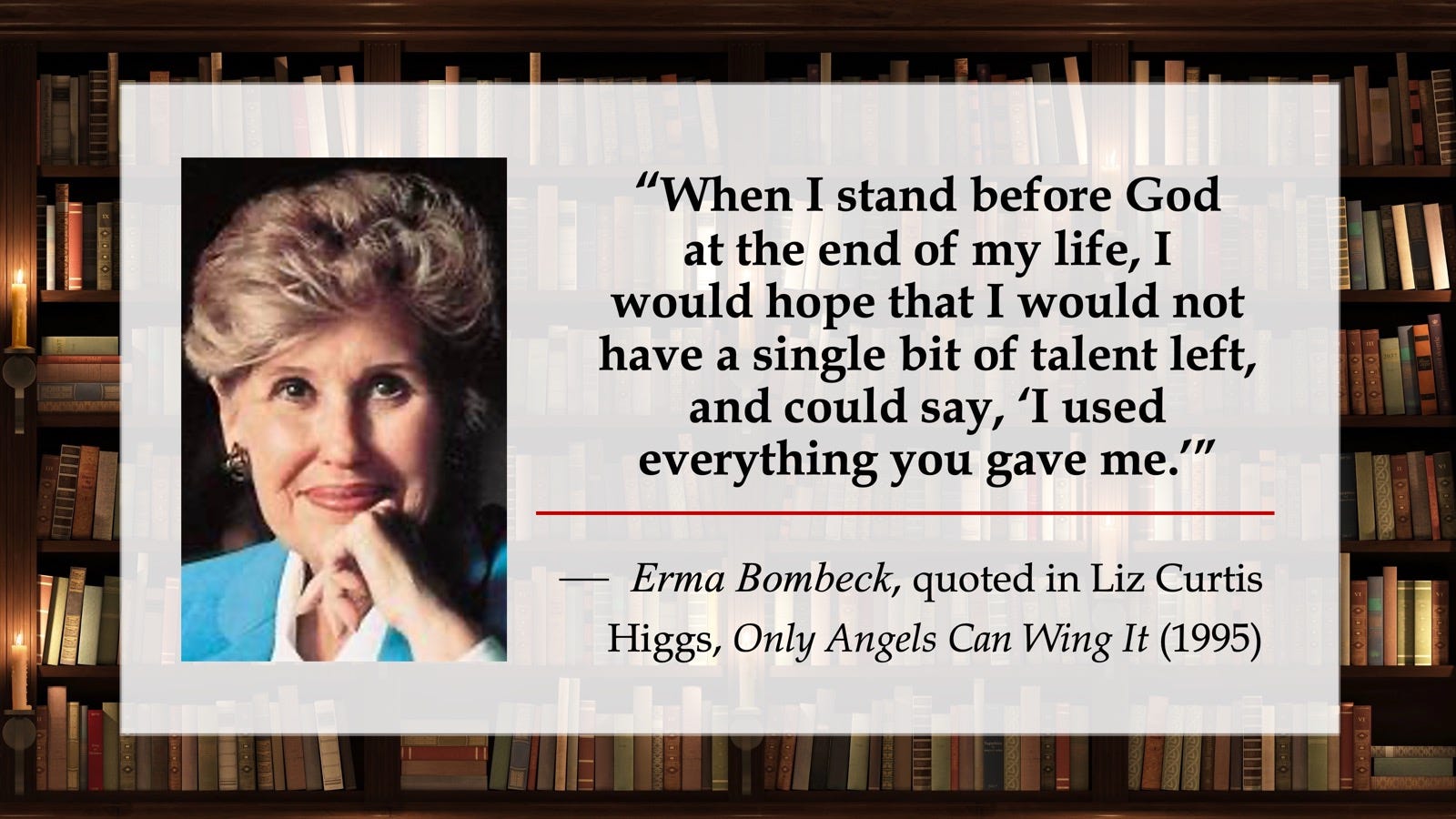
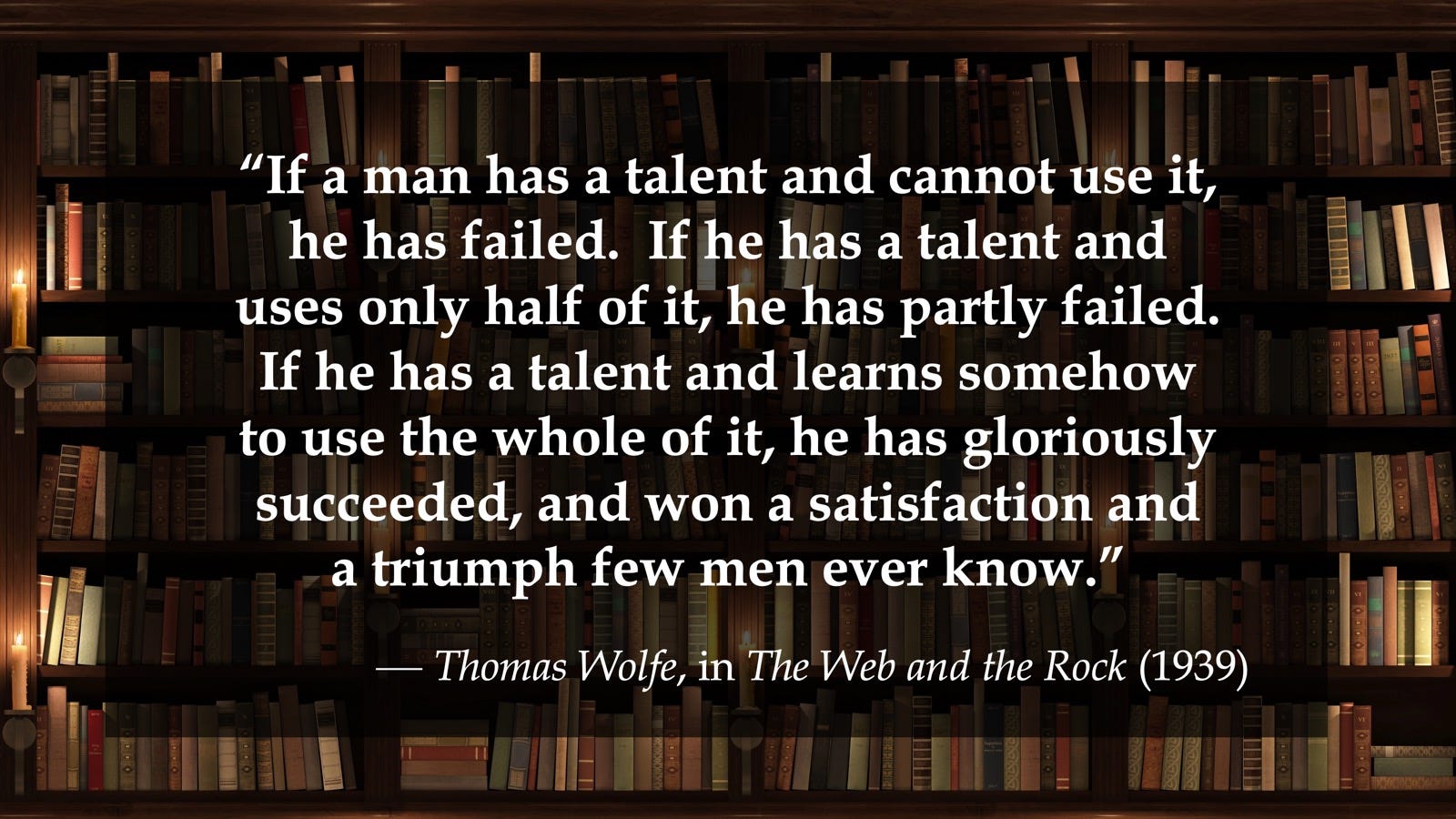
One of history’s oldest lessons is that possessing a talent and making productive use of a talent are two very different things. We’ve all known enormously gifted people who never fulfilled their promise. Perhaps they lacked ambition, or discipline, or confidence. Perhaps they were defeated by circumstances beyond their control. Or perhaps they simply failed to recognize what they possessed until it was too late.
Conversely, we’ve all known people whose natural gifts seemed relatively modest but who achieved remarkable things through determination, persistence, curiosity, and sheer hard work.
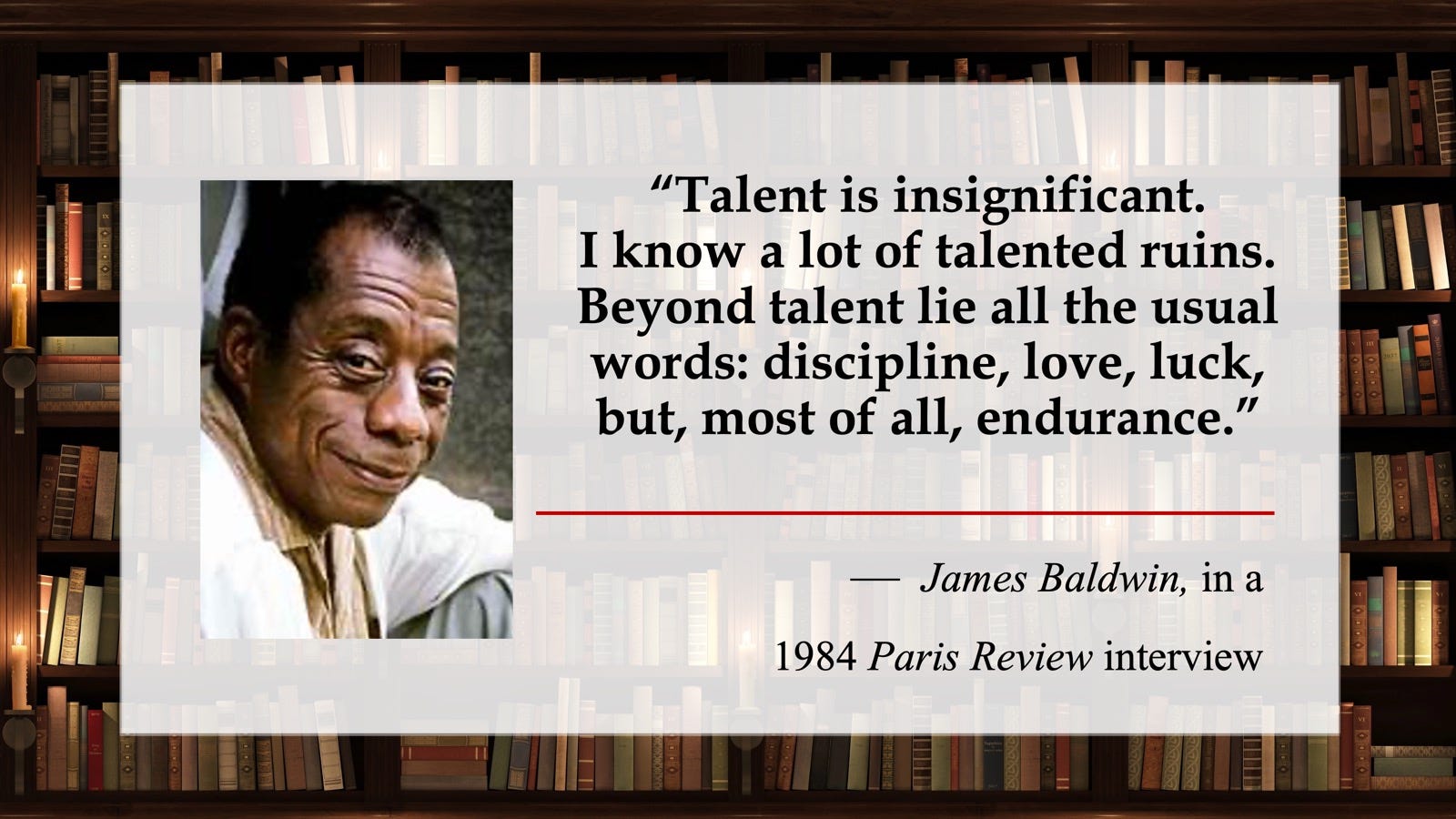
And this is where discussions of talent become psychologically interesting. When we describe somebody as “talented,” we sometimes talk as though nature has already done most of the work. But it is far better, I think, to view any kind of natural talent as a starting point rather than a finished product. In his 1984 Paris Review interview, James Baldwin was asked, “Can you discern talent in someone?” His answer is as relevant today as it was then:
So, what is the biggest takeaway from this week’s post? It’s a simple lesson, but one that’s been ignored by far too many people over the centuries:
A talent is a gift we’re given. What we do with it is up to us.
This week, take a few moments to reflect on the role that talent has played in your life. What talents did you recognize early in your life? Which ones did other people see in you before you saw them in yourself? Which have you nurtured over the years? Which have you neglected? And is it possible that there may be one or two undiscovered—or underdeveloped—talents waiting for you to give them a chance?
Before you do anything, though, take a few moments to peruse this week’s selection of quotations on this week’s theme:
Every person is born with a talent, and happiness depends on discovering that talent in time. — Isabel Allende
Talent is only a starting point in this business. — Irving Berlin
An idea can turn to dust or magic, depending on the talent that rubs against it. — William Bernbach
Every form of talent involves a certain shamelessness. — E. M. Cioran
True happiness involves the full use of one’s power and talents. — John W. Gardner
Great talents are the most lovely and often the most dangerous fruits on the tree of humanity. They hang upon the most slender twigs that are easily snapped off. — Carl Jung
But of course we can’t take any credit for our talents. It’s how we use them that counts. — Madeleine L’Engle
As tools unused become rusty, so does the mind; a garden uncared for soon becomes smothered in weeds; a talent neglected withers and dies. —Ethel R. Page
Having talent is like having blue eyes. You don’t admire a man for the color of his eyes. I admire a man for what he does with his talent. — Anthony Quinn
For source information on these quotations, and many, many others on the topic of TALENT, go here.
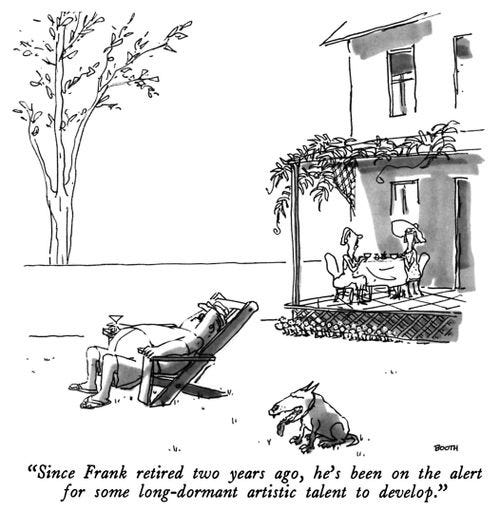
Cartoons of the Week:
Answer to This Week’s Puzzler:
Robert Benchley. His son was Nathaniel Benchley.
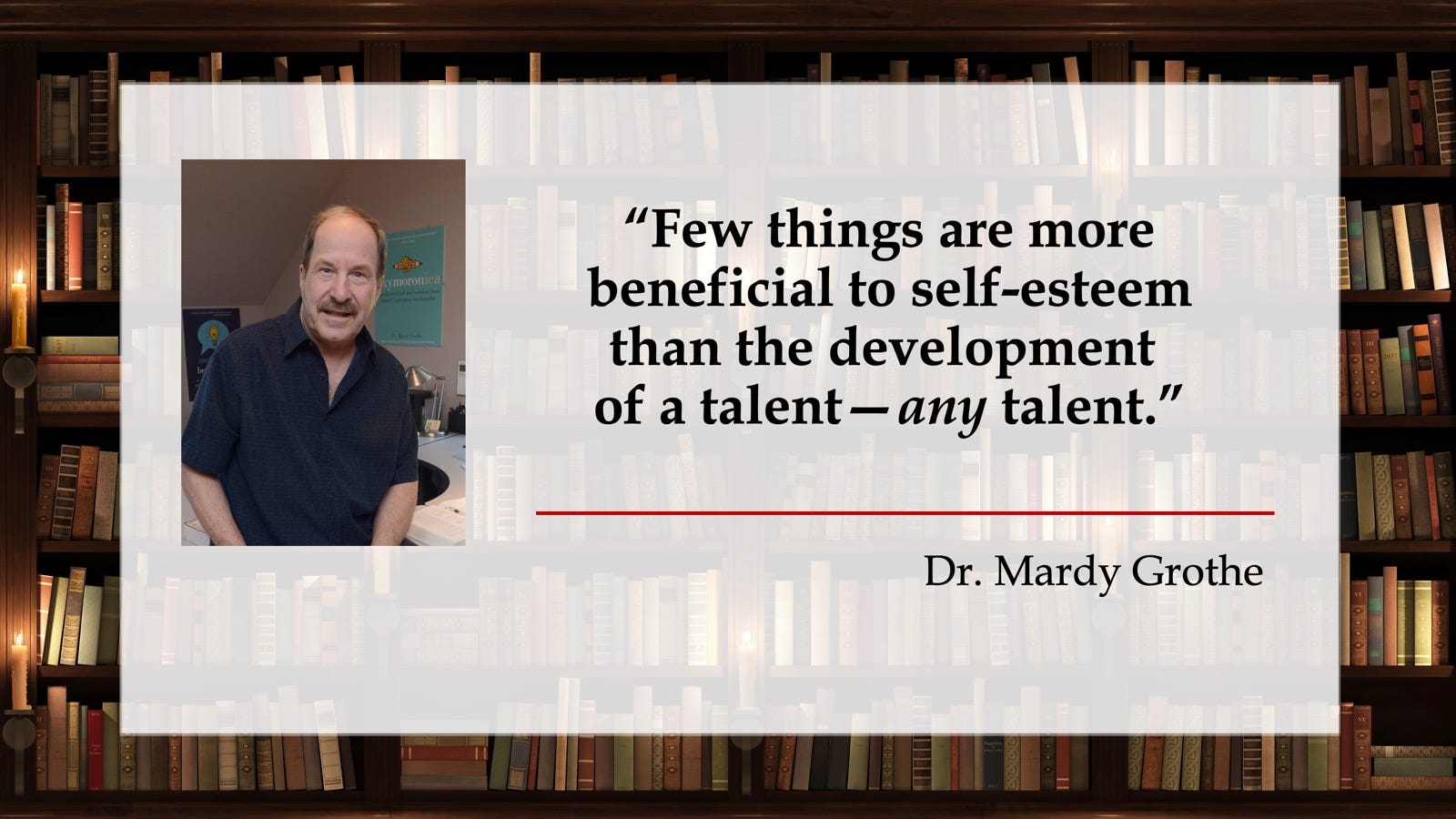
Dr. Mardy’s Observation of the Week:
Thanks for joining me this week. See you again next Sunday.
Mardy Grothe
Websites: www.drmardy.com and www.GreatOpeningLines.com
Regarding My Lifelong Love of Quotations: A Personal Note
I really had to chuckle at this week's theme! Couldn't believe the coincidence, which I'll explain in a moment. I was born with my musical talent and there was no question in my mind that it would rule my life with its development. I'm not sure that I was exactly faithful to it throughout the years (a few hiatuses of marriage, etc.), but it still takes up a part of my daily life. As for the coincidence, this morning, at 11:00 AM Eastern time, I will be interviewed on the YouTube Christina Watson Jazz channel. Chris became one of my idols sometime in the 20-teens, when I heard her incredibly beautiful voice on the car radio as we were driving to visit the kids. I wrote to her and as time went by, we became good friends. Can you imagine the joy when someone you have grown to love and admire grows to feel the same way about you? Last week, she graciously asked me if I would be interested in her interviewing me on her YouTube Channel and, of course, once I recovered my senses, I happily agreed. Even at 95, wonderful things can still happen.
Mardy, your talents are on display every week in this column and in your delightful books. The kiss/fool book is my favorite. I like this example from Ronald Reagan, December 10, 1987 following a visit from Gorbachev: "Nations do not distrust each other because they are armed, they are armed because they distrust each other." I was born with many talents, but the jobs I've had have allowed me to discover and foster talents I didn't know existed. One example. Working in a hospital, I was responsible for running disaster drills. I became so good at it that the City of Berkeley, CA asked me to help them plan city wide disaster drills. Necessity often reveals hidden talents. And as Navajo artist R.C. Gorman said in 1988, "Talent is not made to sit on. You've got to expose it."