
If You Haven’t Voted, There’s Still Time to Do So
It is commonly observed—even when it’s clearly not true—that an upcoming election is “the most consequential in history.” The claim has become so familiar that it’s become practically a ritual of American political campaigns. This year, we’re hearing the argument being made about the midterm elections—and a good case can be made that this time the claim may be true. With control of Congress at stake, the November 3rd election will help determine the direction of the country during the final two years of President Trump’s second term.
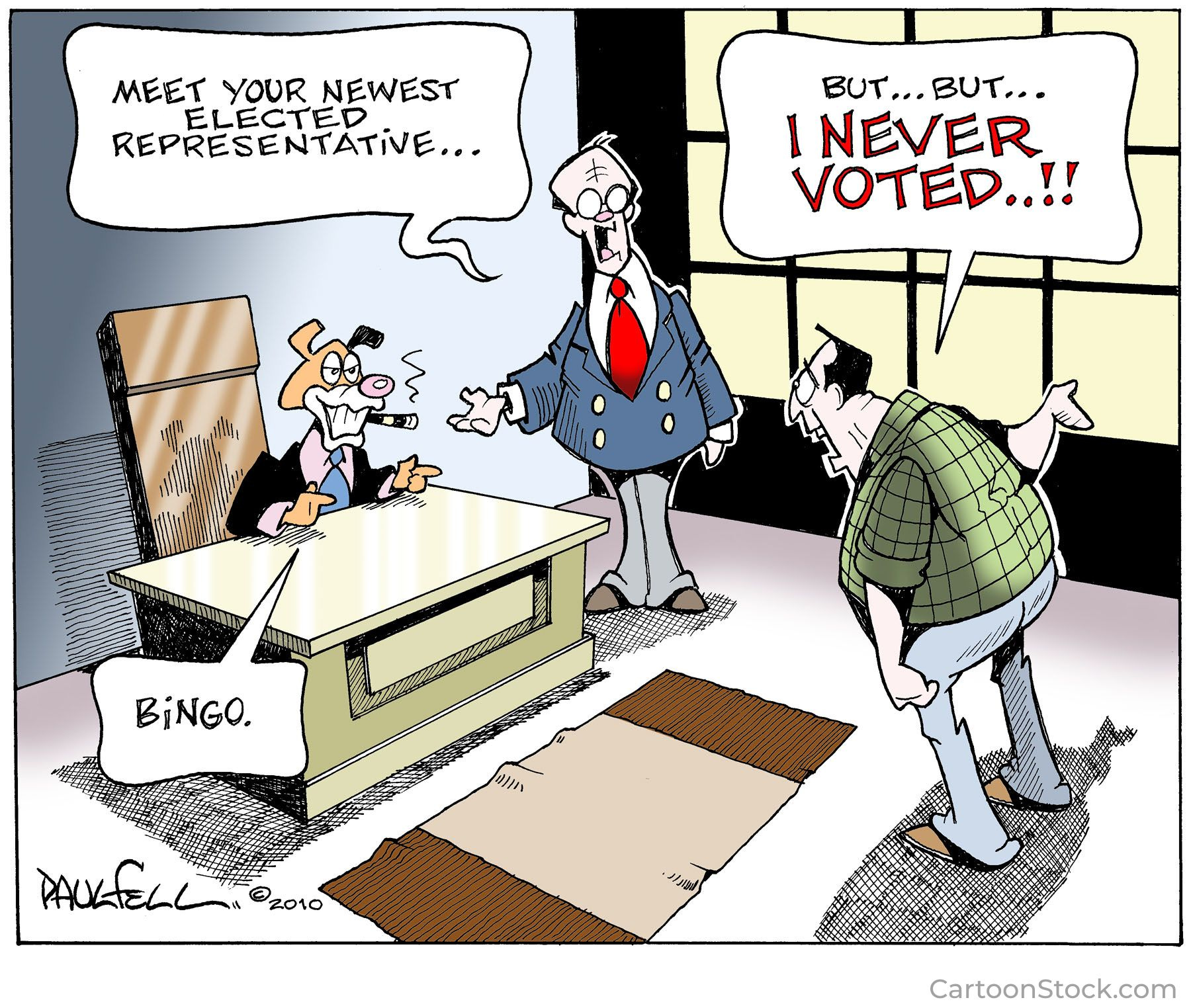
Even when midterm elections are regarded as enormously consequential, however, the majority of eligible voters will not be showing up at the polls. This sad reality reflects an enduring paradox at the heart of American democracy—the very people whose lives will be most profoundly affected by an election’s outcome often fail to exercise their opportunity to help determine it.
In five of the last six midterm elections, more than half of eligible voters did not vote. The lone exception was 2018, when 50.5% actually made it to the polls. In 2014, only a little over one-third (36.6%) of eligible voters decided to cast a ballot, starkly illustrating the problem of political apathy.
As I reflected on this somewhat dismal state of affairs, I realized I addressed the issue in a post I did two years ago. I’ve chosen to reprise it this week.
Opening Line of the Week
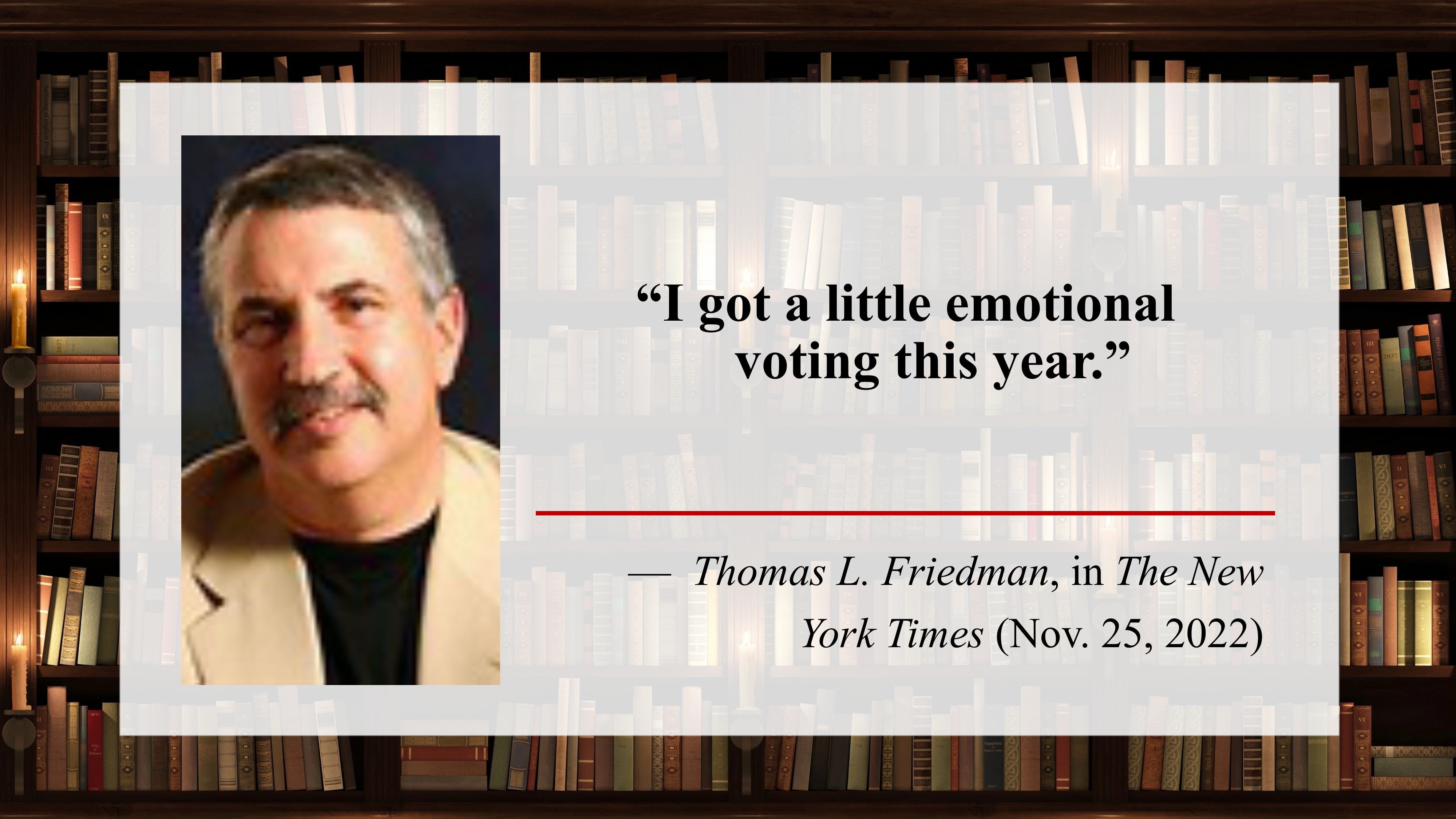
Friedman’s admission about his voting experience in the 2022 mid-term elections also perfectly summed up my own feelings—and, hopefully, yours as well. I was delighted to honor his simple-but-powerful opening words in my compilation of “The Best Opening Lines of 2022” on Smerconish.com (see the full list here).
I’ve voted in every presidential election—and every midterm election—since pulling the lever for John F. Kennedy in 1960, and the truth is that I got a little emotional in every one of them. To my mind, there is something so deeply personal about voting that I cannot understand why millions of my fellow citizens appear to be completely indifferent about this most sacred of civic duties.
When all the ballots are finally counted in a few days, it is highly likely that the number of eligible voters who didn’t vote will come close to matching the number who chose to do their civic duty. We’ll explore this sad reality in more detail below.
For more 2,000 memorable opening lines from every genre of world literature, go to www.GreatOpeningLines.com.
This Week’s Puzzler

On Nov. 3, 1909, this man was born in Clydebank, Scotland. At age ten, shortly after moving with his parents to America, he acquired the nickname “Scotty” (the moniker stayed with him his entire life).
After graduating from high school in Dayton, Ohio, he majored in journalism at the University of Illinois, graduating in 1932. He worked as a reporter and publicist for several years before he was hired by The New York Times in 1939 to work as a reporter in their London Bureau.
He spent his entire fifty-year career with “The Gray Lady,” the legendary nickname for the newspaper, serving as a reporter, columnist, Washington bureau chief, executive editor, and finally, vice-president of the company. When he died at age 86 in 1995, he was one of the 20th century’s most influential journalists. The recipient of two Pulitzer Prizes, he helped create history’s first Op-Ed pages, providing an avenue for journalists and others to express opinions and personal views.
Serious journalists are not typically known for having a sense of humor, but this week’s Mystery Man was an exception. Once, when reflecting on his background, he remarked, “I’m a Scottish Calvinist, and nothing makes us happier than misery.”
In his long and distinguished career, he authored many memorable observations, including this from a 1968 Op-Ed article:
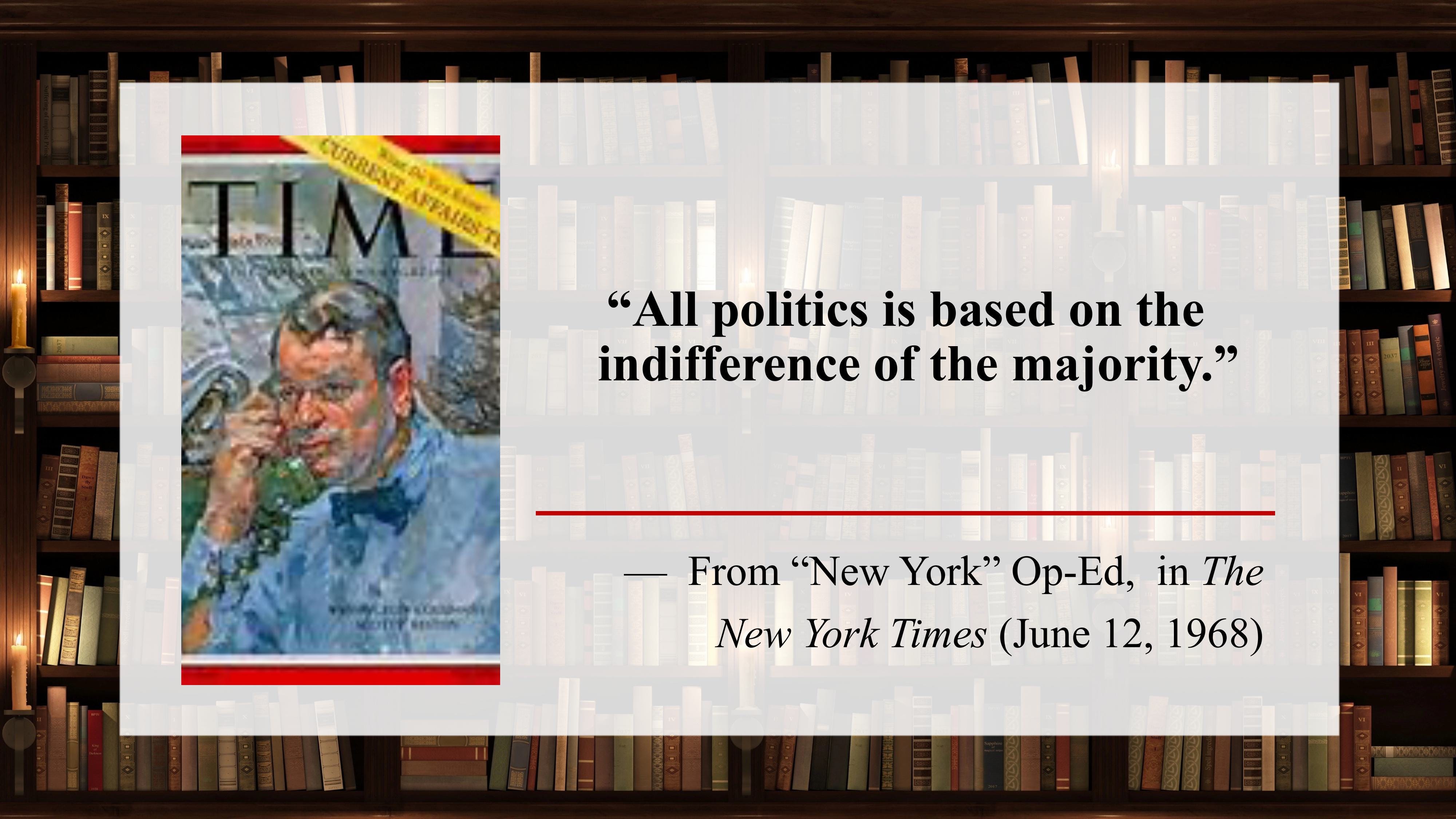
Who is this person? (Answer below)
Are You Politically Active or Indifferent?

The quotation in this week’s Puzzler comes to my mind every election cycle, for it captures one of the saddest of all political realities—citizens not voting because of indifference, apathy, or an overall lack of civic engagement. In trying to better understand this phenomenon, let’s start by taking a look at the word indifference and another closely related word, apathy.
I’ve been dipping my toe into the world of artificial intelligence lately, and this week I decided to pose ChatGTP this question: “Can you provide a definition of indifference, especially as it applies to politics?” Here’s the answer I got:
“Lacking interest or concern; apathetic. In the context of politics and civic affairs, indifference refers to the attitude of someone who shows little to no interest in political issues, public responsibilities, or the well-being of their community. An indifferent person may not vote, engage in public discourse, or care about policies that affect society at large.”
I can certainly live with that definition, for it comports with my own view that indifference is a frame of mind in which people have such a low level of interest in something that they have absolutely no preference between two or more alternatives. This may not matter very much when it comes to flavors of ice cream or who wins the World Series, but it becomes a matter of grave concern when we see people who are indifferent to good versus evil, right versus wrong, or democracy versus autocracy.
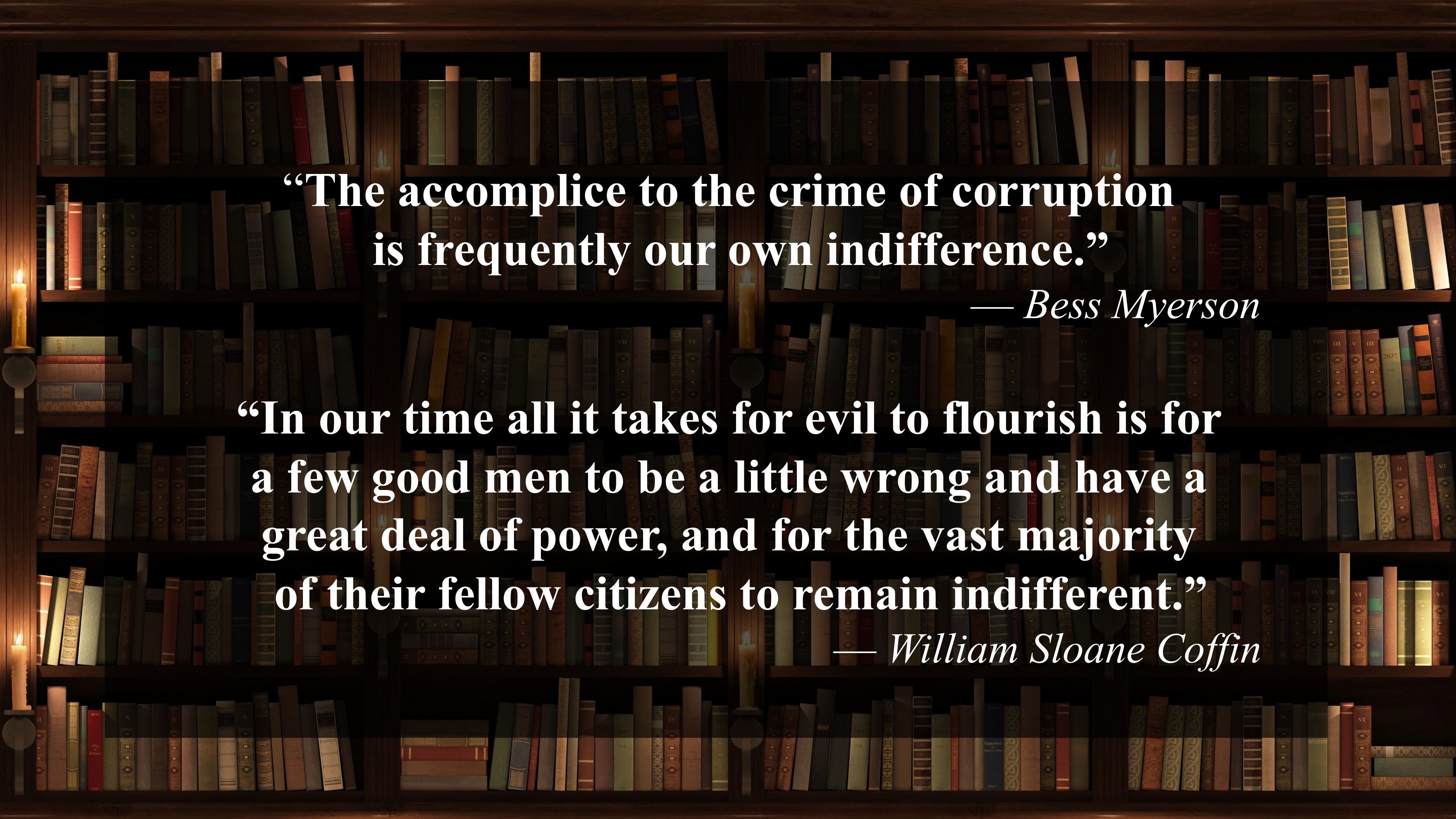
I also appreciated how ChatGTP made indifference synonymous with apathy, which the American Heritage Dictionary defines this way: “Lack of interest or concern, especially in matters of general importance or appeal.”
All of this serves as helpful background as we return to the quotation in this week’s Puzzler. The phenomenon that this week’s Mystery Man dubbed “indifference of the majority” is all about elections where the level of voter participation is low.
In the 2016 presidential election, for example, the voter turnout rate was a little over 55 percent, which meant that almost 45 percent of eligible voters abstained. Because of Donald Trump’s electoral college victory, he won the presidential election, even though he lost the popular vote to Hillary Clinton. Trump received just under 63 million votes, Clinton almost 66 million, and nearly 8 million went to other candidates. So, how many eligible voters did not vote?
A. 50 million. B. 70 million. C. 90 million. D. 110 million.
The correct answer is the third option, and I can still recall being shocked when I saw that number for the first time. Just think about it. The candidate who won the most popular votes received 66 million votes, 24 million votes fewer than the total number of eligible voters who chose to sit on the sidelines in what was being described at the time as “the most consequential election in American history.” At the time, many felt that the results perfectly captured the notion of “the indifference of the majority” (although, technically speaking, it actually reflected the indifference of the plurality).
The numbers were slightly better in the 2020 election, where the voter turnout rate was nearly 67 percent, the highest in over a century. Joe Biden won both the electoral college as well as the popular vote, with a little over 81 million ballots cast for him, slightly over 74 million for Donald Trump, and nearly 3 million to other candidates. In 2020, about 80 million eligible voters did not participate—ten million fewer than in 2016—but still a significant portion of the electorate.
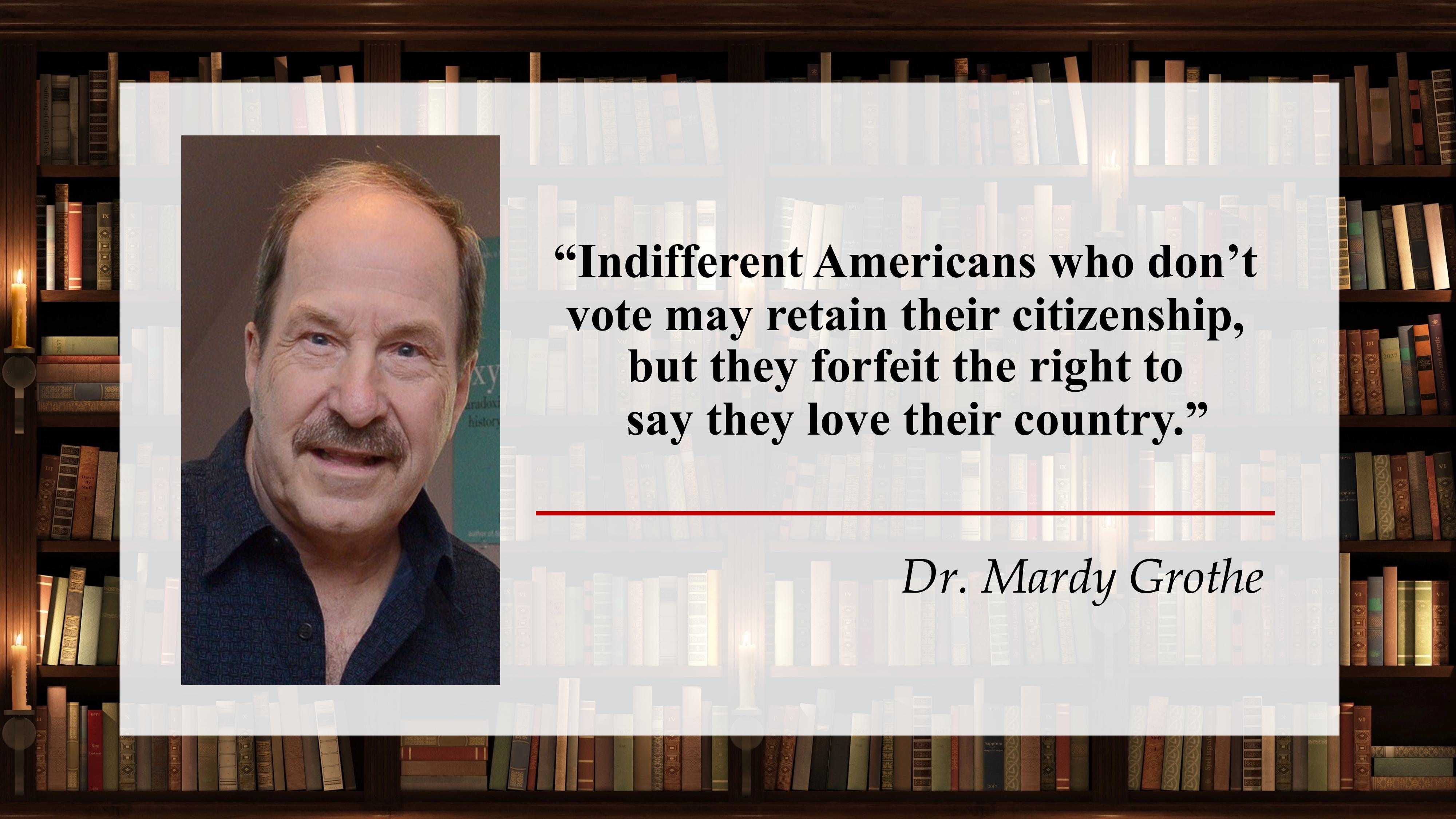
People who don't vote are deeply troubling to diehard voters. For us, voting is not a right, it is a duty—and the decision to sit out an election is a dereliction of duty. Speaking a bit more graphically, not voting is like spitting on the graves of the countless numbers of citizens who have literally given their lives to preserve perhaps the most important right in a democracy.
In the 2024 election, the evidence suggests that voter turnout will again be high. But even if it is, there’s still a fair chance that the number of people who vote for the winning candidate will fall far short of the number who decided not to vote at all. As a subscriber, you will very likely be voting, and I salute you, no matter who you vote for. If you’re not planning to vote, though, I can only say shame on you.
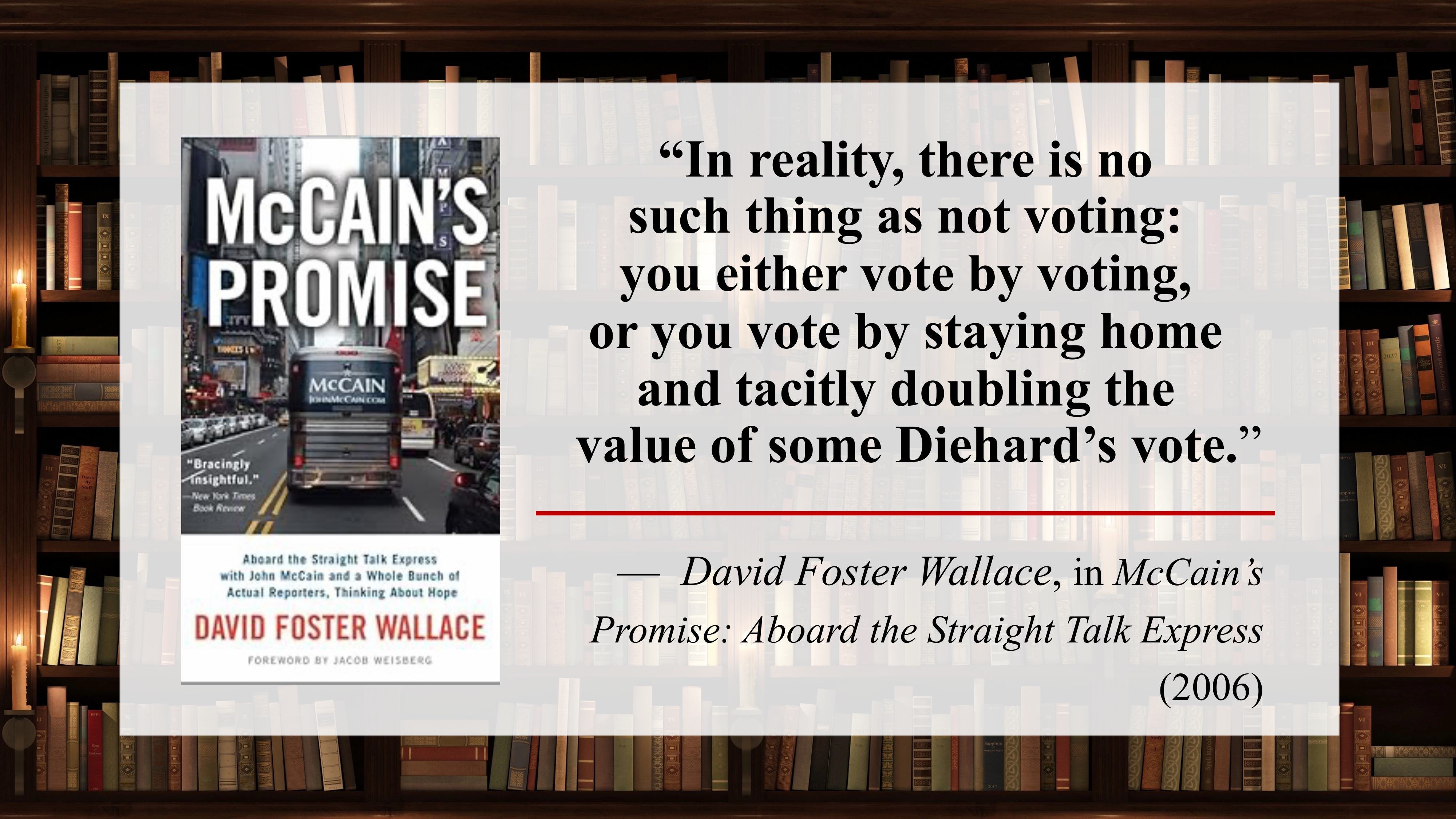
On a final note, if you know someone who isn’t planning to vote this year, it’s not too late to invite them to join you at the polls. Who knows? They just might accept. You may also want to share with them some of your favorite quotations from this week’s compilation of quotations—half on the subject of indifference and half on the subject of voting:
Suffrage is the pivotal right. — Susan B. Anthony
A certain combination of incompetence and indifference can cause almost as much suffering as the most acute malevolence. — Bruce Catton
The individual is capable of both great compassion and great indifference. He has it within his means to nourish the former and outgrow the latter. — Norman Cousins
Voting is a civic sacrament. — Theodore Hesburgh
If your vote didn’t matter, they wouldn’t try so hard to take it from you. — Samuel L. Jackson
The death of democracy is not likely to be an assassination from ambush. It will be a slow extinction from apathy, indifference, and undernourishment. — Robert M. Hutchins
Not voting is voting to hand your power over, to throw it away and give it to somebody whose interests are going to be harmful to your own. — Eric Liu
Bad officials are elected by good citizens who do not vote. — George Jean Nathan
Indifference and neglect often do much more damage than outright dislike. — J. K. Rowling
As soon as you notice the slightest sign of indifference…you should realize your soul has suffered harm. — Albert Schweitzer
The worst sin towards our fellow creatures is not to hate them, but to be indifferent to them: that’s the essence of inhumanity. — George Bernard Shaw
Men are accomplices to that which leaves them indifferent. — George Steiner
I am a man, and nothing that concerns a man do I deem a matter of indifference to me. — Terence (3rd c. B.C.)
QUOTE NOTE: This is an earlier translation of a famous passage that is now generally presented in this way: “I am human, and think nothing human is alien to me.”
After the first blush of sin comes its indifference. — Henry David Thoreau
A vote is a prayer about the kind of world we want to live in. — Raphael Warnock
Because of indifference, one dies before one actually dies. — Elie Wiesel
For source information these quotations, and more thoughts on the theme of INDIFFERENCE, go here. For quotations on VOTING & VOTERS, go here.
Cartoon of the Week:
Answer to This Week’s Puzzler:
James “Scotty” Reston (1909-95)
Dr. Mardy’s Observation of the Week:
Thanks for joining me this week. See you again next Sunday morning.
Mardy Grothe
Websites: www.drmardy.com and www.GreatOpeningLines.com
Regarding My Lifelong Love of Quotations: A Personal Note
Mardy, absolutely loved your choice of topic on the eve of our midterm election. Encouraging words. I understand that voting is compulsory in Australia with a $20 fine for not voting. Their voting rate is 90%. I worked with the Alaska Election Commission in 1988. In that state about half of the population voted and half of that number selected the winner, which means that the winner represented only a quarter of the population. In 2018, I published a short book (Make Your Voice Heard) for women politicians on getting elected by giving campaign speeches, media events, debating, etc. based on my 40 year career teaching public speaking to politicians and others in 9 countries. I hope your column will inspire those who were hesitant to make their voices heard. Thank you.
Mardy,
Great column as usual. You may, I sincerely hope, awaken a few folks that are "meh" about whether or not to vote (the "I am only one vote" contingent).
I believe your subscribers are not part of that group. I also hope you will grant me permission to share this week's entry with my small network of friends.
Best to you and Kathryn
Ed Kant